
Interview: Kari Kilgore on Making Time for Justice
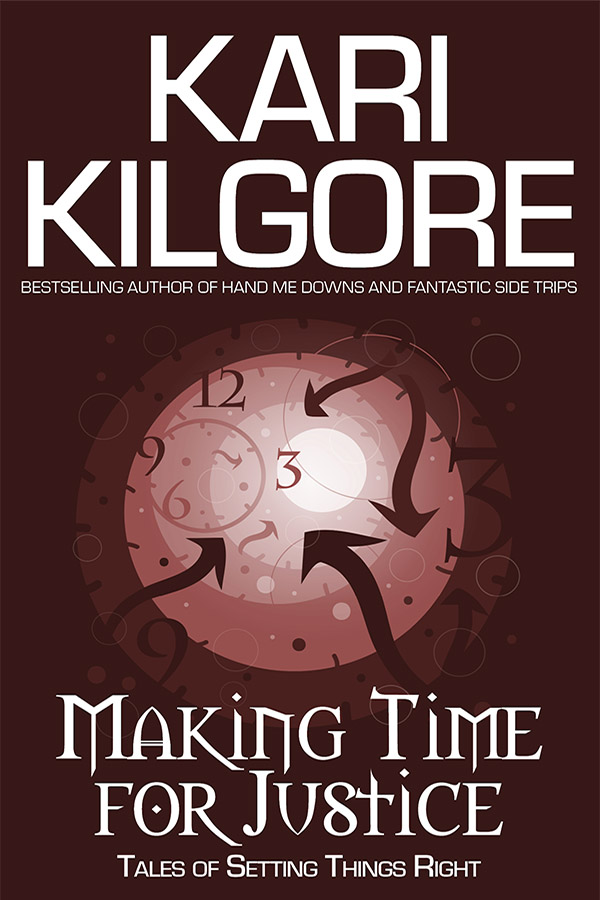
Time holds relentless power over us—only forward, never back, unconcerned with our desires and regrets. In Making Time for Justice Kari Kilgore’s stories ask what we’d do if someone found a way around that one-way dominion.
Kris Rusch curated the collection around justice—“something we desperately need (and can’t have easily) in 2026”—but the justice Kari reaches for is often smaller and more intimate than setting the whole world right: something as simple and powerful as mending a loved one’s broken heart. Across five original stories, including “Adventures Beyond the DNA Doorway,” in which a traveler journeys back through his own genetic line to meet his ancestors, she plays with both the joys and the risks of defeating our one-way timeline.
The Interview
You’ve said you suspect real time travel would come with more than its fair share of risks and repercussions—“a lot like life already does.” When you’re inside one of these stories, do you feel you have a built-in source of trouble and stakes, and how do you use that as a writer?
Much as I feel like real time travel would be inherently risky, in fiction, we get to create situations where we observe and can’t make changes. That seems a lot safer on the surface for sure. But only until we consider how whatever the character sees in the past affects them.
It can be great fun to play with paradox, where the actions of the time traveler might adjust something in their present and future. And even more fun to dig into how the unexpected knowledge a character gains can mess with their minds. Sometimes for the best, but not always. Writers can be kind of cruel that way already. Throwing the endless possibilities of time travel into the mix makes it irresistible!
“Adventures Beyond the DNA Doorway” sends Ben Tarix back through his own genetic line to visit his ancestors. Traveling through your own DNA rather than a machine makes the whole thing feel inherited and personal. Where did that idea come from, and what did it let you do that a more conventional time machine wouldn’t?
Several years ago, National Geographic offered DNA testing that included ancestral migration. Other companies do the same thing. So you’d get estimates of when your distant relatives likely lived in certain parts of the world. This was quite general, of course, nothing like “You had a 7x great aunt in this specific town in this specific year.” I was struck by the idea of being able to travel back to certain ancestors’ times, to see the world and life through their eyes. What a way to learn the real truth about your family tree! And how many people would be greatly surprised by what they discovered?
“Adventures Beyond the DNA Doorway” is my first time digging into that idea, but I’m quite sure it won’t be the last.
You’ve wondered whether our ability to “Consider What We Might Have Done Differently”—replaying a moment hoping for a new and improved outcome—might be a big part of why people tell stories at all. If you had the chance to go back in time and change something yourself, what might it be?
Oh, now you’re really getting into those risks and repercussions! I’ve read and seen too many stories about how badly wrong things can go with time travel. The most innocent and seemingly minor adjustment can multiply and ripple forward in ways you never expect.
And still, given the chance, I’m sure I’d probably at least try to do something different.
Honestly, what I’d be most likely to change would be small moments between people. The times I’ve wished I’d offered a kind word, or stood up for someone, or stood up for myself. That might still be dangerous as far as changing the timeline, but I’d be more willing to take the risk.
Kris frames your collection around justice—the kind we badly want and can’t easily get. But you’ve described the justice you were reaching for as sometimes “something as simple and powerful as mending a loved one’s broken heart.” Across these five stories, where does the line fall for you between setting the whole world right and mending one small thing—and which kind do you prefer to write about?
This goes along with the previous answer about what I’d change. I’m quite sure I’m not the only person who has moments they’d like to revisit to try to make things right on a small scale. I expect the danger there would be getting too focused on wanting to make that small, personal change, and not considering how it might affect the larger world. Or how you might instead use the power of time travel to make bigger corrections, if you dare.
Taking a look at my stories for this collection, they do tend toward those small changes. Even one that could potentially change everything, it was driven by wanting to mend that broken heart. But writing these stories has me curious and inspired to dig into situations that might affect many people, or the whole world, or even multiple dimensions. Stay tuned!
You write across fantasy, romance, science fiction, mystery, and contemporary, and you’re happiest when you surprise yourself. Working inside one tight frame this time—five stories, all circling time and justice—did any of them still manage to surprise you and go somewhere you hadn’t planned?
My stories almost always surprise me! I never plot out in advance at all, because discovering what happens next is a huge part of the fun for me. I trust that the little girl who runs the writing machine inside my head knows what she’s doing, and I do my best to keep up. When writing is going well, I feel like I’m reading the story rather than telling it. What a joy!
But it’s often the stories I write in first person—from the point of view of I rather than she, he, or they—that surprise me the most. Even more than usual, those stories feel like I’m taking dictation as the character explains what happened. In this collection, that’s “Breaking the Grip of the Past.” Almost every word of that one surprised me.
You and Jason A. Adams share a home, and now also a StoryBundle, both writing about time travel. What’s it like working the same territory at once? Do you trade notes and theories about how time would actually behave, or deliberately keep to your own corners of it?
I never show him or anyone else what I’m writing until it’s finished, and I can’t remember the last time I talked about a story in progress. Probably not since my first novel many years ago. The whole process has gotten a lot more private. Not because I don’t trust him by any means! I just want to protect the voice of my imagination.
But he’s a fantastic first reader, and I hope I am as well. What a treat to read a story no one else in the world has seen.
We talk about storytelling constantly. Whether it’s books we’re reading, music we listen to, or plays or movies or TV. We’d probably drive non-writers crazy with the way we pause something so we can discuss what just happened, or what might happen.
Same thing with science or history or what’s going on around us, especially when we travel. Those conversations frequently point right to a new story seed. And yes, sometimes that extends to theories about time travel or other fictional ideas for a collection. Just not the details of a story as we’re writing them.
What are you working on now—and what’s fun or exciting about it?
I’m finishing a short story for the Uncollected Anthology, which is always one of my favorite projects to write for. This one hits another shared theme of Equinox, and I can’t wait to see how everyone else approaches it.
Jason and I are also planning a couple of joint Kickstarters that should be all kinds of fun, so keep an eye out for those!
About the Author
Endlessly creative author Kari Kilgore’s wanderlust and imagination lead her all over the world on grand adventures. Her heart and family bring her home to her native Appalachian Mountains of Virginia. From that solid base and with the help of the ever-changing lens of her imagination, she brings those adventures to life in fiction.
While Kari has her share of wishing past events might have gone differently, she’s of the firm opinion that time travel would have more than its fair share of risks and repercussions. A lot like life already does.
Kari writes fantasy, romance, science fiction, mystery, and contemporary fiction, and she’s happiest when she surprises herself. She lives with her husband and fellow author Jason A. Adams, various house critters, and nearby wildlife they’re better off not knowing more about.
Find Kari
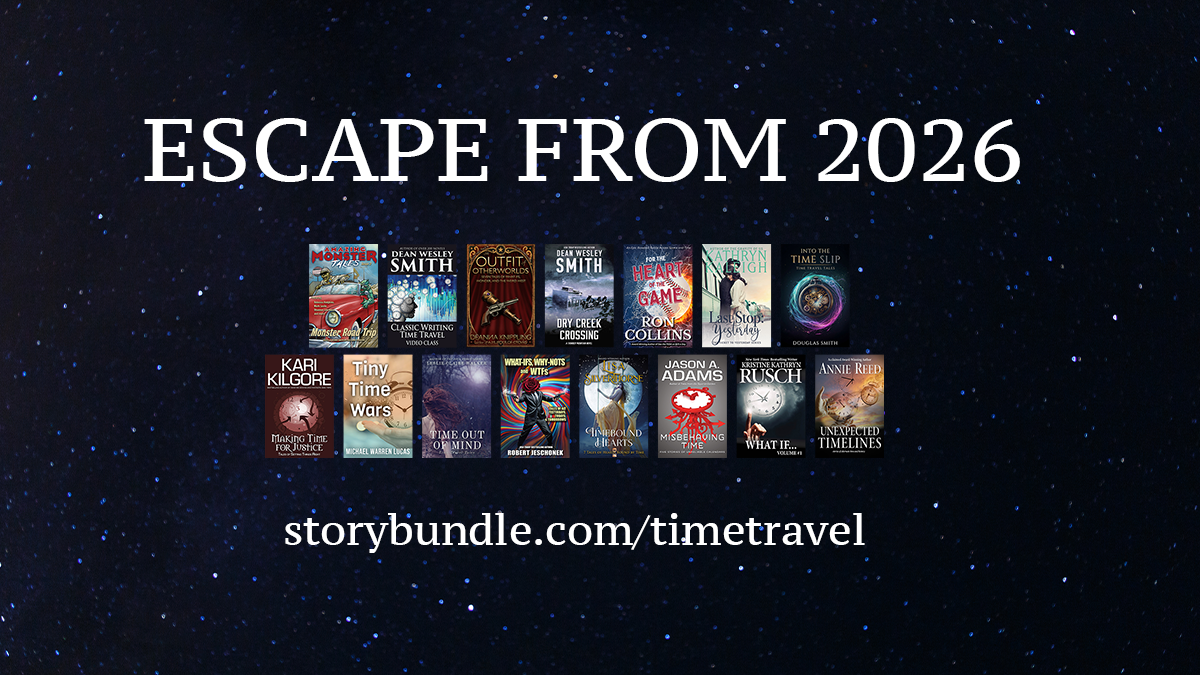
Making Time for Justice is available now in the Escape from 2026 StoryBundle, curated by Kristine Kathryn Rusch. 15 exclusive books of alternate history and time travel—pay what you want, starting at $5. Customers can choose to direct a portion of their payment to World Central Kitchen. The bundle runs through June 25, 2026.