
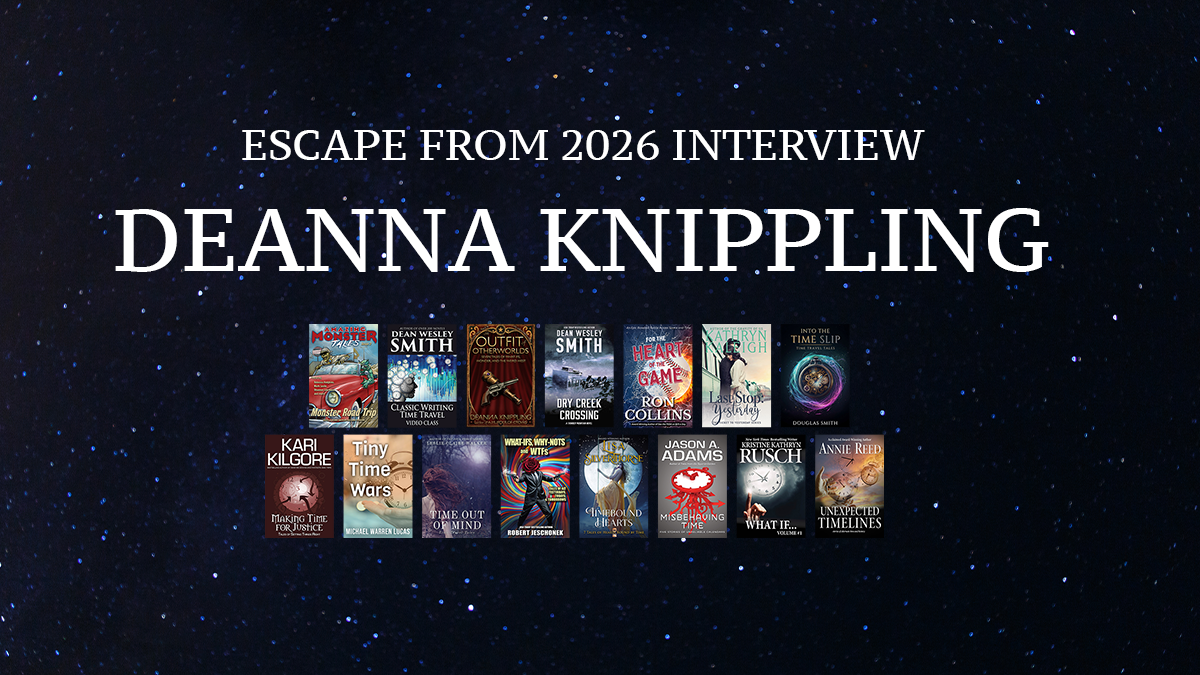
Interview: DeAnna Knippling on An Outfit of Otherworlds
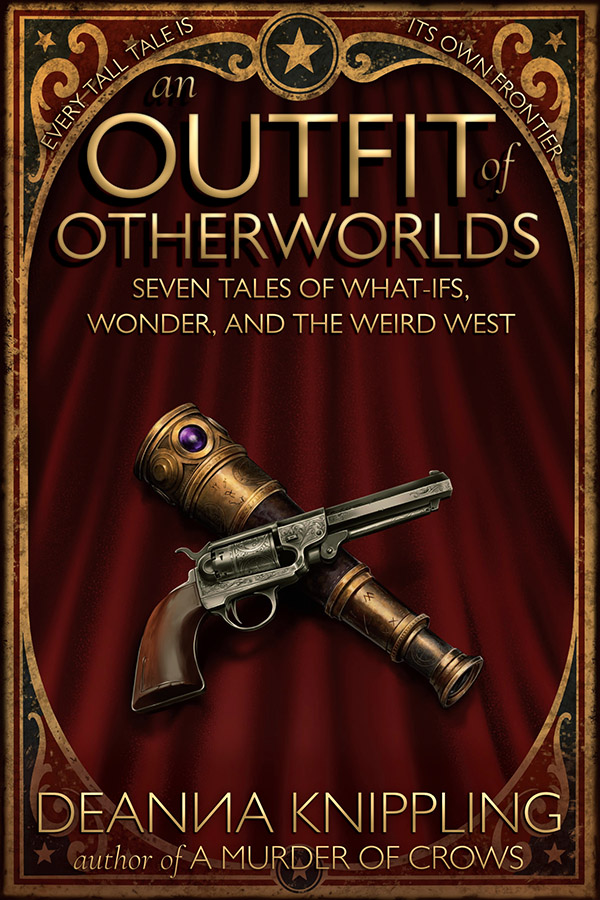
Dakota Territory, 1888. A shabby, weather-worn carnival pulls into a railroad stop in the middle of nowhere, and the barker out front swears his seven wagons hold wonders—some beautiful, some cruel, some ravenous, some impossible. DeAnna Knippling’s An Outfit of Otherworlds gathers seven tales told from inside that ragged circle of wagons, where not every wonder is the kind you’d want to pay to see.
The Interview
You’ve written gothic horror, steampunk, puzzle mystery, dark fantasy. The Weird Western feels roomy enough to hold all of the genres at once. Why do you think that is?
Westerns—that is, stories set mostly in the American West of the 1880s or so—are a sort of fantasy world, kind of like the American version of the Big Dark Woods of fairytale medieval Europe, or even like the Regency period of historical romances. There are lots of other examples of this type of setting, too. With a sort-of-mythological setting, lots of readers are already familiar with the setting. You already have a common starting point. Which means that writing stories set in those sort-of-mythological settings is almost like writing fan fiction for the setting, and you can and should go nuts with the story. It’s almost a disappointment when a Weird Western or a fairytale retelling or a Regency set in a world with magic isn’t a little bit nuts. Most readers are familiar with Jane Austen or the Brothers Grimm or Louis L’Amour—or Shakespeare. The great sort-of-myth stories are almost by definition strong enough to survive a retelling or two, in various directions.
The carnival barker in your collection threads all seven stories together—“the past, the future, and everything in between.” What made a barker—a teller of tall tales openly running a con—the right voice to hold them together?
Heh. I was totally riffing off of Tom Waits in The Ballad of Buster Scruggs. That movie. It’s almost like each scenario could have been given a better ending, if only the characters had switched places. If you pull Tom Waits out of the gold mining story and shove him in the traveling theater wagon story, he could have made a profit off poor Harry Melling’s character.
Kris Rusch says you go looking for “the darkness at the heart of the American West.” You put that darkness on the land itself—a prairie that “strips all institutions and illusions away.” What do you think is left once it’s stripped bare?
I think we’re watching one set of myths get stripped off and replaced with another. The U.S. used to be based on the myth of the Wild West, the idea that all you had to do to make your fortune was face impossible odds with determination and grit; greed wasn’t just bad for the people around you, but inevitably left you exposed as a damn worthless fool. The heroes in white hats rode away into the sunset because they knew they weren’t competent at running the town or settling down with the local widow.
I think the myth’s getting shifted into something else these days, from the American West to some kind of weird Russian tragicomic novel, where everyone dies but what you remember best is the character who got away with the stupidest, greediest lies for the longest amount of time, and most of the other characters are little more than simple peasants who deserve what they get, and are only noteworthy in how funny they are when they complain. It also kind of feels like the American West, as flawed a myth as it is, is getting replaced by Middle Earth—only the bad guys won and are rewriting the tale.
To me, it’s felt like this for an absurdly long time, at least since 2001 or so.
L. Frank Baum lived in this same Dakota Territory before he wrote Oz—but he came from Back East, and to him the Plains were a frontier full of hope and possibility. Unlike Baum, you grew up in the Dakotas, and your tales run darker than his. Where do you think that difference comes from?
One, he left Dakota Territory pretty quickly. As a newspaperman, he was not unaware of the genocide that was happening at the time. But also two, he was a professional storyteller, and he had a vision for what the West could have been: gentler, more charming, full of decent people once you got a few psychopaths and con artists out of the way. Or something like that.
Me, I come from the perspective of people taking L. Frank Baum’s gentler retelling of the Western myth and pretending that the Great Plains really were that decent and kind, when it was never anything of the sort. Course correction, that’s all.
Your barker reeks of bourbon and some animal smell you can’t name. He’s repellent, but you can’t stop watching him. How do you build a character a reader knows they shouldn’t trust but they follow anyway?
Yeah, to me it’s me giving a quick sketch of Tom Waits’s performer persona. I think Tom Waits has done a lot of work observing and retelling the myths of America, showing them all broken up and scrambled in the pan. The surreality of his songs makes the reality easier to swallow, for me. As for my narrator… hm. Charming people aren’t any less fascinating when you know they have ulterior motivations.
What are you working on now—and what’s fun or exciting about it?
I’m working on a comic fantasy/superhero novel about the end of the world and the con job that will save us all. It’s called The Apocalypse Job. I’ve been studying Donald Westlake capers; the superheroes are Gen X/elder Millennial idiots in the same style as Dortmunder and his crew. I’m having a fantastic time writing it.
About the Author
DeAnna Knippling is a versatile author celebrated for her imaginative storytelling across multiple genres, including gothic horror, steampunk, puzzle mystery, psychological suspense, and dark fantasy. Her works, such as The House Without a Summer and The Clockwork Alice, have garnered praise for their inventive narratives and unique twists on classic tales. Readers commend her ability to blend the macabre with the whimsical, creating immersive worlds that captivate and intrigue. Whether exploring twisted fairy tales or unraveling crime, DeAnna’s stories linger long after the final page.
Find DeAnna
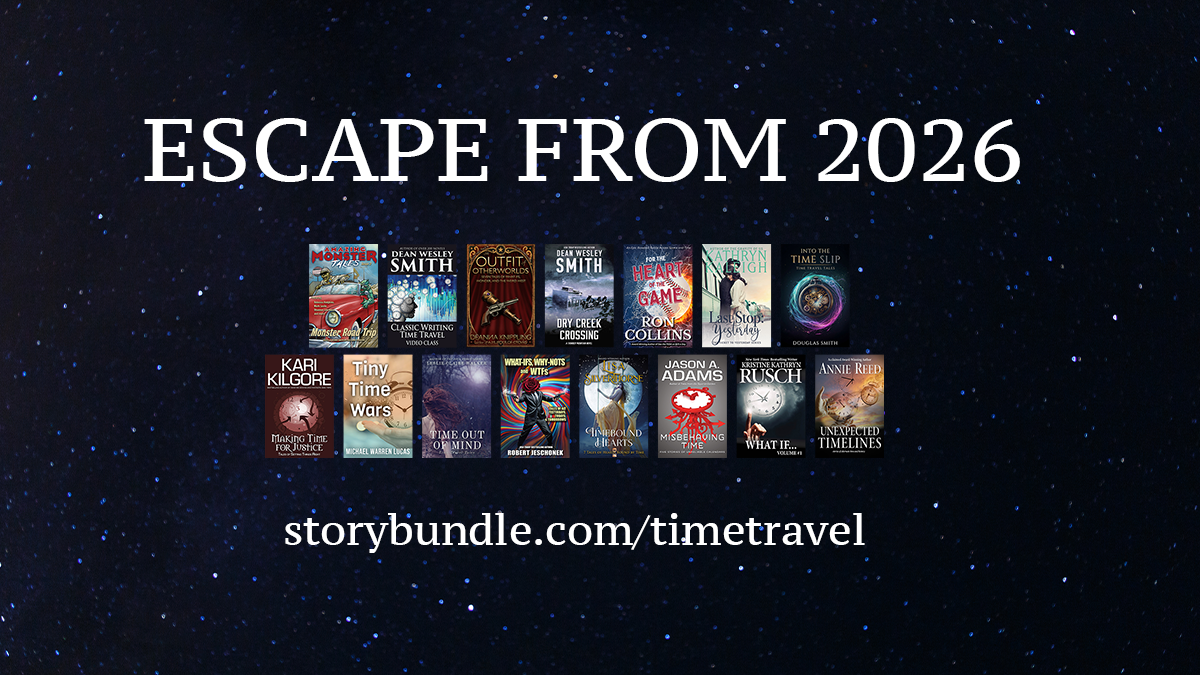
An Outfit of Otherworlds is available now in the Escape from 2026 StoryBundle, curated by Kristine Kathryn Rusch. 15 exclusive books of alternate history and time travel—pay what you want, starting at $5. Customers can choose to direct a portion of their payment to World Central Kitchen. The bundle runs through June 25, 2026.