Interview: DeAnna Knippling on The Fold Magic Stories
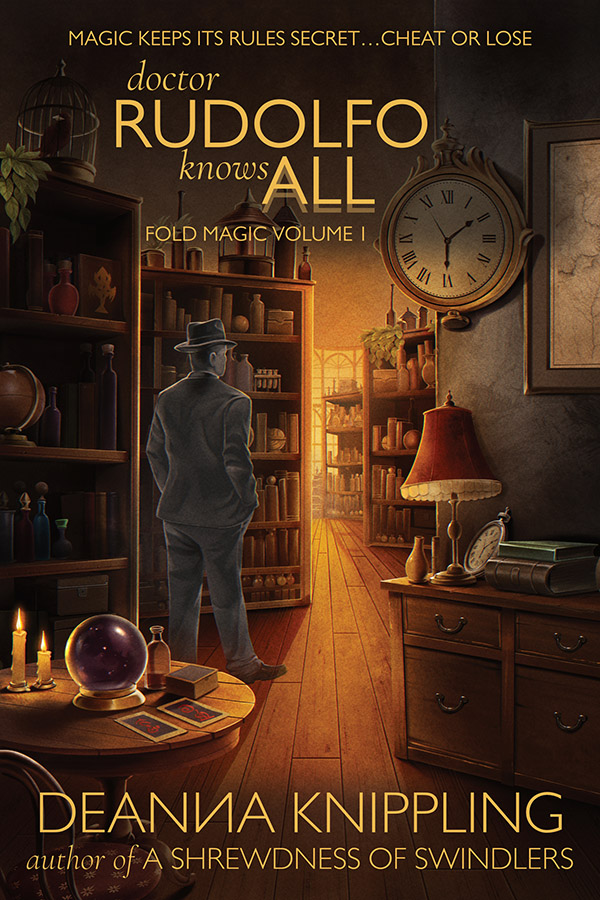
Some fantasy builds a whole new world. DeAnna Knippling’s does something sneakier—it takes a place you already know, lets reality crease, and waits for the strange to slip through. In The Fold Magic Stories, that place is Colorado’s Front Range: red sandstone, suburbs running out into open space, and a family where the dad is a ghost, the grandmother is a witch, and two brothers are working out what it costs to be the kid who’s a little bit magic. DeAnna’s three books are one of fifteen exclusive collections in the 2026 Fantasy Bundle of Bundles, curated by Kristine Kathryn Rusch.
The Interview
Your collection runs on the idea of “the fold”—creases in reality where two points that should never touch end up meeting. What is it about in-between places that keeps you writing about them?
It started on a practical level. In-between places can be based on, and inspired by, and comment upon real-world places and situations. I don’t have to make up a whole world just to write a story, and some of the stories I’ve written have been to extremely tight deadlines. Later on, I started connecting dots in other stories that I like, where anchoring a fantastic story in a specific place made it feel more meaningful to write.
But also I’ve read a fair amount of excellent contemporary fantasy (and horror) from other generations that has impressed me with how wildly divergent it is, yet still manages to catch a sense of place. Stephen King’s stories set in places he’s lived or visited come to mind; so do Zenna Henderson’s short stories (I love The Anything Box). Hope Mirrlees’s Lud-in-the-Mist, Ray Bradbury’s Dandelion Wine, even a bunch of classic Twilight Zone episodes do this.
It kind of just evolved into this sense of writing stories that feel sort of fae, without necessarily any Fae in them.
You could set contemporary fantasy anywhere, but you chose to set your stories in Colorado’s Front Range—red sandstone, suburbs thinning into open space, the mountains rising right at the edge of town. What makes it the right home for these stories?
Write what you know 😉 I lived there from 1998-2021.
Your Doctor Rudolfo stories focus on two kids, Connor and Aiden. Their dad is a ghost, their grandma is a witch, and both boys have a variety of adventures that help them learn and grow. But their “adventures” aren’t always rosy and fun. What inspired you to create these stories?
In retrospect, it was about learning to deal with neurodivergence. I have a neurodivergent daughter, and have had to similarly sort myself out and go “Yes, me too.” I grew up in the Eighties as “gifted and talented,” and that label was used against me for a very long time. Accepting that I am—and my daughter is—neurodivergent has been a bumpy road. What if there were something that made you “special” or “magic” in a world where other people constantly used that as a lever? Connor, the older brother, tries to hide it. Aiden, the younger one, never really had the ability to do so. Their powers affected them both in different ways.
You collect new systems the way crows collect shiny things—tarot, cocktails, instruments, a new hobby four times a year. How often does one of those end up becoming the engine of a story, the way tarot did here? And what’s your latest system?
I’m gonna say the current obsession has been studying comedy and humor. I was going to try to do more with voice acting, but a call to write a comedy novel came in, so I’m running with that first. This time, the story came first and trying to cram in the system second. I haven’t got it all figured out yet, but some things I’ve been observing:
- There’s humor that’s mean and belittling, and humor that’s empathetic, where you recognize yourself somewhere in the situation.
- The first type of humor is about bad things happening to people who aren’t you. The second type is about misunderstandings between people who might be you.
- The smaller and more personal you can make a big idea, the funnier it is.
- If you want to make a piece of fiction funnier, take out any internal or external dialogue that explains a thing, and replace it with a misunderstanding that demonstrates what happens when stuff goes wrong.
- Two people arguing over literally anything where they don’t share the same assumptions is funnier than one person getting kicked in the crotch.
- Like the Marx brothers’ gag with Harpo and Groucho thinking they’re both seeing themselves in a mirror, writing gags that go on for far too long is a joy.
What are you working on now—and what’s fun or exciting about it?
The comedy! I’m working on The Apocalypse Job, a caper/heist novel about a group of middle-aged gamer geeks with hidden superpowers who get together for one last job: stealing the Apocalypse. I’m sure the heist will go well. I just got to write a reference to Mary Poppins in it: The laws of physics were optional inside Violet’s purse. I keep reading sections of it out loud to my daughter. She had to lie down a few times from laughing too hard <3
About the Author
Nobody delights—or devastates—readers quite like DeAnna Knippling, veteran author of 80+ strange stories for interesting people.
DeAnna collects new systems the way crows collect shiny things. She makes cocktails to understand flavor logic, reads tarot cards to study psychology, plays a number of musical instruments badly, loves museums, explores via kayak whenever possible, and picks up a new hobby four times a year…because that’s just how her brain (over) works.
Find DeAnna Knippling
Get the bundle
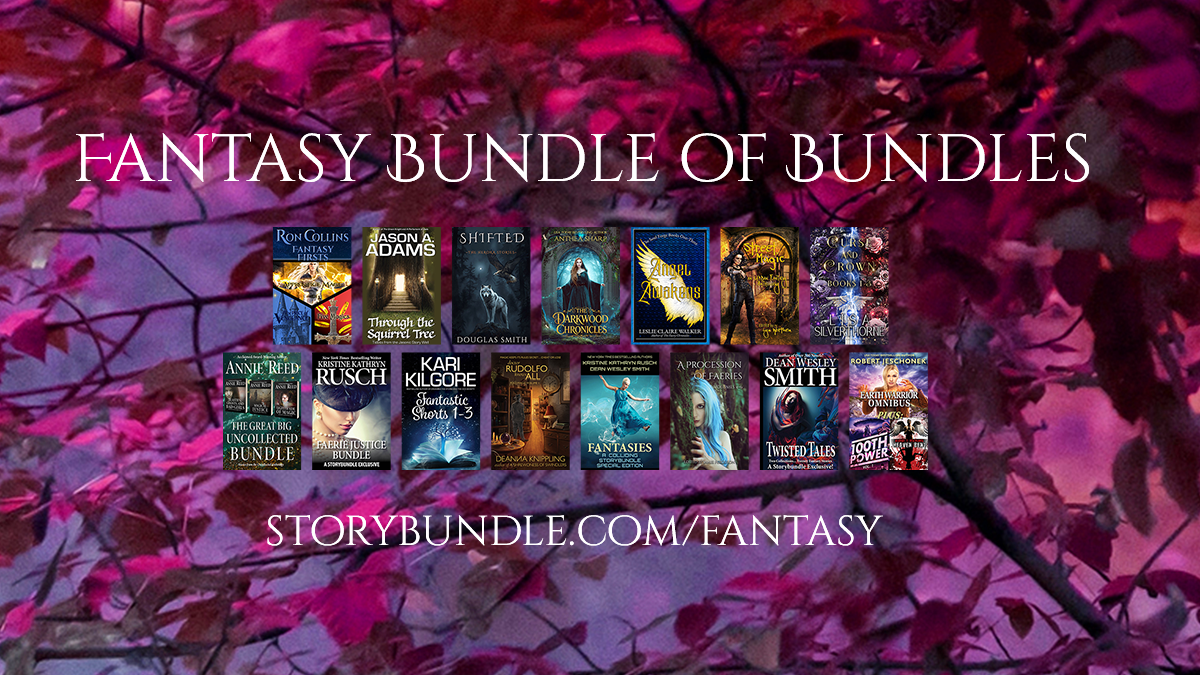
The Fold Magic Stories is part of the 2026 Fantasy Bundle of Bundles, fifteen exclusive collections curated by Kristine Kathryn Rusch. Pay what you want, and you can choose to send a share of your purchase to World Central Kitchen. Live through August 27, 2026 at storybundle.com/fantasy.