Interview: Darcy Pattison on Picture Books: Write and Publish
Darcy Pattison has been writing and publishing children’s books for decades. She’s published over seventy books, both fiction and nonfiction, and has earned starred reviews and a shelf full of awards. About fifteen years ago, she attended a Master Class with Kristine Kathryn Rusch and Dean Wesley Smith, which inspired her to launch her own publishing house, Mims House Books.
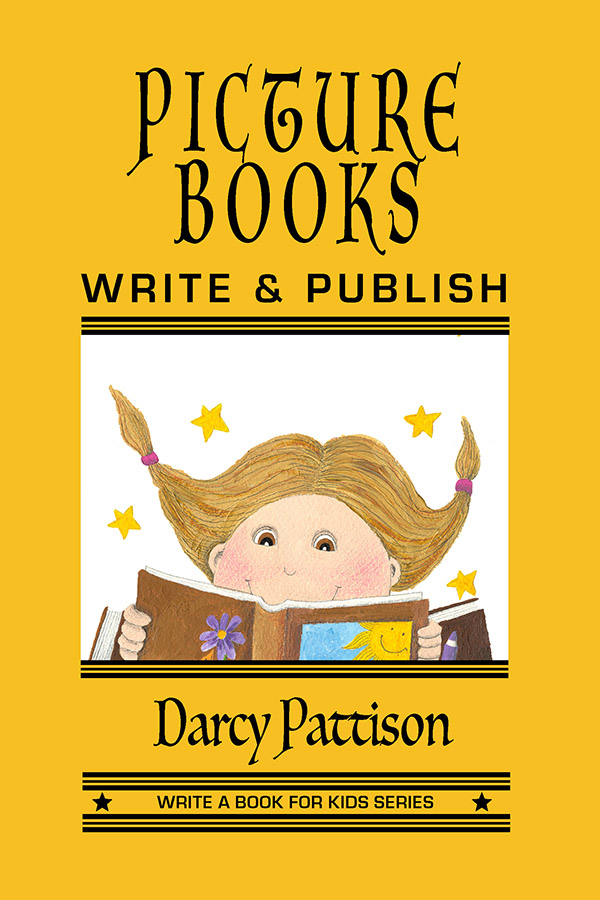
Her contribution to the Write Stuff StoryBundle is Picture Books: Write and Publish, an exclusive combining two titles from her Write a Book for Kids series. If you’ve ever wondered what it takes to write and publish children’s picture books as an indie—or why the rules for adult indie publishing don’t quite apply—you’ll want to check out Darcy’s books!
The Interview
You’ve written over seventy books, and have won numerous awards. When you look back at all of the children’s books you’ve written, is there a throughline you see? A question you keep returning to, or a kind of story you can’t seem to stop telling?
I write and publish lots of nonfiction meant to be used in the elementary classroom, so I study the curriculum for Science (NextGen Science Standards), social studies, and English to find ideas. When I write fiction, though, it’s usually science fiction or fantasy. Tales of wonder—that’s what fascinates me.
About fifteen years ago, you attended a Master Class with Kris Rusch and Dean Wesley Smith, and it led you to launch Mims House Books. What was it that made you think, I need to do this myself?
I realized that legacy publishing (publishing with traditional publishers) wasn’t for me. They were too slow, didn’t understand my books, and had no respect for my writing. I decided that I believed in my books enough to take the risk of starting a children’s publishing house. I went from despair that my writing career was over to the joy of creating, knowing that the story had an actual chance of finding the right readers. I’ve never looked back. 70 books later, I’m still going strong!
Children’s books occupy this fascinating publishing territory where you’re writing for one audience but marketing to a completely different one—kids versus parents and educators. How did that reality shape the way you built Mims House, and what did you have to figure out that no one was really talking about?
I once saw a Shark Tank episode where the Shark talked about the cost of acquisition of a parent as a customer for children’s clothing. The problem is that you only have that customer for a few years before their child ages out of the products. I realized that targeting parents for books would also be expensive and hard. So, I’ve always looked for the education market: elementary teachers, school librarians, content specialists, reading specialists, etc.
That means, for example, I don’t care about bookstore sales. I never participate in promos that target bookstores, because that’s not my audience.
Some authors DO go for parents and they structure their businesses very different from mine. Knowing your target audience is crucial. You won’t waste money on advertising that goes nowhere. You’ll write different books to appeal to what your audience likes, wants, and will pay for.
Children’s publishing offers you choices for your audience, and you must make strong choices to succeed.
You’ve described indie publishing advice for the adult market as reading “a text in a foreign language”—which is exactly why you started IndieKidsBooks.com. What’s an example of conventional indie publishing wisdom that sounds right but just doesn’t translate to children’s books?
Those who write for adults depend on ebooks to reach their audience. But the basic format for children’s books is the paperback book. Many parents want to limit “screen time” but they also want kids to read more. That means paperbacks.
Kids DO read ebooks, but they do it on reading apps where the parent pays $10/month and gets access to 30,000 books. Parents and educators won’t buy even $2.99 books for kids, partly because they are so short it doesn’t seem like a good value, but also because kids go through so many books at a time! But a $10 app that gives you thousands of options—they go for that.
That means paperbacks are our bread-and-butter, while ebooks only work if your books are on the right apps.
You’ve put together an exclusive for this bundle, Picture Books: Write and Publish. What will readers find inside, and who is it for?
For the last five years, I’ve written IndieKidsBooks.com, a blog chronicling my journey indie-publishing my children’s books. I always meant to gather the posts into a coherent book, and that came about last year. Publish a Kid’s Book: Find Surprising Success Self-Publishing answers all the questions about establishing a children’s book publisher and finding success. For this exclusive edition, I’ve paired it with Write a Kid’s Picture Book: Create Heartfelt Stories, a book that explains the structure of children’s picture books and how to write a successful one.
The combination of the books gives the aspiring picture book writer an in-depth look at the challenges and joys of working in children’s literature as an independent publisher. After fifteen years of publishing my own books, I’ve earned over $100K/year for the last five years. I do this for the kids; but I also expect to be financially successful. The books are meant to help you take that leap, too.
Picture books are deceptively small—32 pages, maybe 500 words—but the craft demands are enormous. What do aspiring picture book authors tend to underestimate about the form?
Picture books are a combination of pictures and text. You must leave room for the illustrator to do their professional job. The writing can’t have talking heads. I leave out adjectives, but provide strong verbs that evoke action illustrations. Think of illustration possibilities evoked by your words, and then let the illustrator choose which possibility will tell the strongest story visually.
NOT: The girl wore white cowboy boots and a ten-gallon white, straw cowboy hat.
INSTEAD: The cowgirl whooped and swung her lasso overhead, steering the cattle away from the corn field.
What are you working on now—and what’s fun or exciting about it?
Right now, I’m intrigued with the idea of a cozy fantasy, where the stakes are more local. I’ve always liked writing sff, but struggled to write the big sweeping stories where the fate of a nation might change. So, I’m writing a rural, cozy fantasy for kids. Will this work? Who knows? But it’s been a blast to write.
About the Author
Children’s book author and indie publisher Darcy Pattison has written over seventy fiction and nonfiction award-winning books for children. Five books have received starred PW, Kirkus, or BCCB reviews. Awards include the Irma Black Honor award, six NSTA Outstanding Science Trade Books, six Eureka! Nonfiction Honor books (CA Reading Assn.), three Best STEM Book, two Junior Library Guild selections, two CLA Notable Children’s Books in Language Arts, two Notable Social Studies Trade Books, a Green Earth Book Award Long List, an Arkansiana Award, and the Susannah DeBlack Arkansas Children’s History Book award. She’s the 2007 recipient of the Arkansas Governor’s Arts Award for Individual Artist for her work in children’s literature. Her books have been translated into eleven languages.
Find Darcy
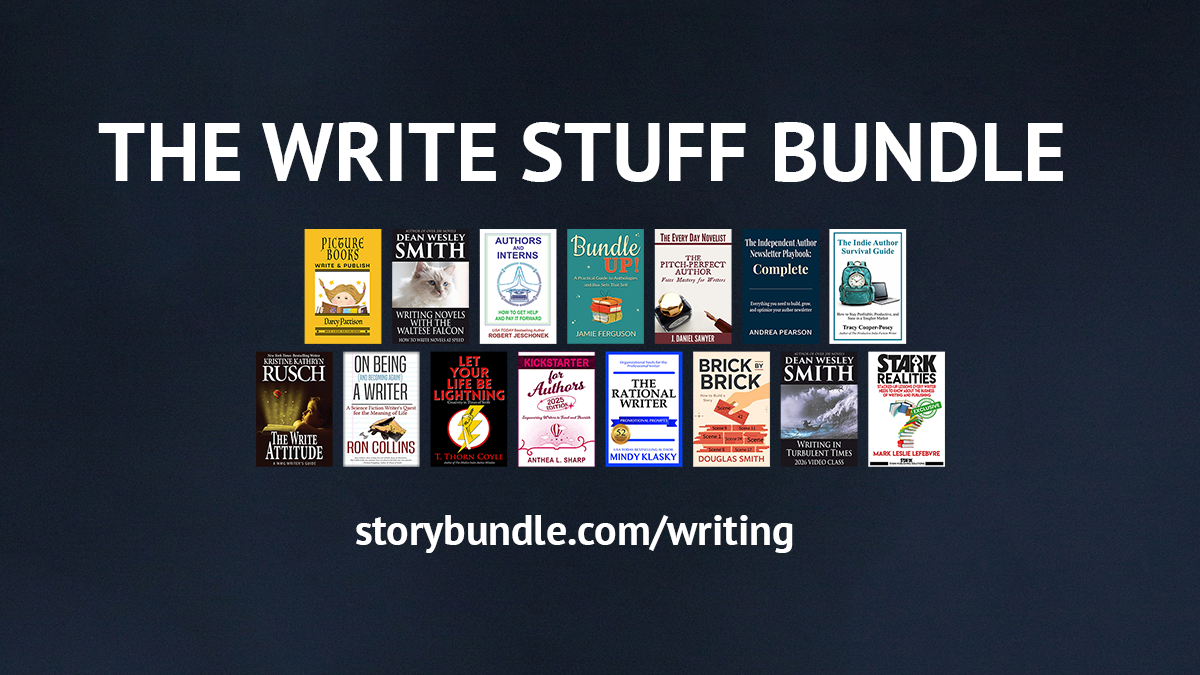
Picture Books: Write and Publish is available now in the Write Stuff StoryBundle, curated by Kristine Kathryn Rusch. 15 exclusive books on writing and publishing—pay what you want, starting at $5. Customers can choose to direct a portion of their payment to World Central Kitchen. The bundle runs through May 14, 2026.